



LED照明: 一个灯具无法满足所有人的需求
作者 总部
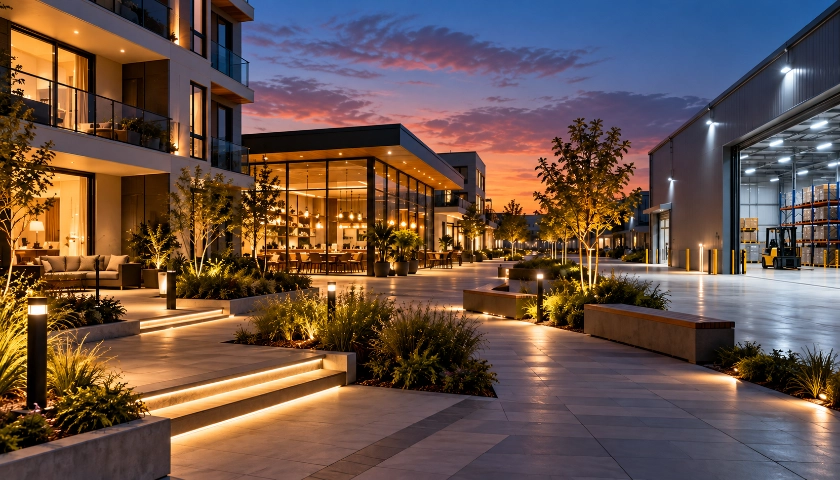
LED 灯具有许多类型, 但没有哪一种灯具能适用于所有空间. 住宅, 商业, 工业, 户外, 公共空间对照明的需求也截然不同. 理解这些差异比死记产品型号更重要. 选择前, 清晰思考这个空间是为何而设的, 使用者, 运行时间长短, and how it will be maintained. This is often more effective than opening a product catalog directly.
Residential Lighting: Comfort and Layers
The core of residential lighting is comfort. Living rooms and bedrooms need soft, warm light; kitchens and studies need brighter, more focused light. Good residential lighting is usually layered: general lighting, task lighting, accent lighting, and decorative lighting used together. 整体照明提供整体亮度, task lighting supports reading, cooking, and working, accent lighting highlights artwork, bookshelves, 或建筑细节, and decorative lighting creates atmosphere.
Color temperature can be warm white or tunable white, giving the space different moods at different times. 例如:, use a higher color temperature during the day to stay alert, and switch to warmer tones at night to relax. Glare control is also important, especially in bedrooms and living rooms. Bedroom fixtures should not shine directly into the eyes; living rooms should consider visual comfort for the TV wall and seating. Kitchen counters, bathroom mirror lights, 楼梯, and corridors all need targeted lighting design.
Commercial Lighting: Attraction and Flexibility
Commercial lighting should highlight merchandise, brand, and spatial design. Retail stores, 购物中心, 餐厅, and hotels usually need high color rendering, accent lighting, and flexible adjustment. Track lights, 聚光灯, 下灯, and linear lights can be combined and adjusted as displays change.
Commercial lighting must also consider operational needs, such as scene switching for different times of day, events, and display layouts. Daytime, evening, and night may require different brightness; promotions, product launches, and holiday events may require different atmospheres. Energy efficiency and low maintenance are equally important, because commercial lighting runs long hours and maintenance costs are high. Intelligent control, zoned dimming, and centralized management can help operators reduce long-term costs.
Industrial Lighting: Safety and Reliability
Industrial environments have tougher requirements for lighting. 高温, 低温, 尘埃, 湿度, 腐蚀, 振动, and explosion risks all affect fixture selection. Industrial lighting must first be safe and compliant, then reliable, uniform, and low-maintenance. High-bay lights, tri-proof lights, explosion-proof lights, and cleanroom lights are designed for different environments.
High-bay workshops need fixtures with high efficacy, 一致性, and good thermal management. 仓库和物流中心可以使用带通道感应功能的线性或高架装置. Cold storage needs low-temperature fixtures. Cleanrooms must avoid dust accumulation and contamination. Explosion-proof areas must use compliant explosion-proof fixtures. Corrosive areas need corrosion-resistant materials. Food processing areas require stainless steel, high IP ratings, and washdown-friendly fixtures. Intelligent control can be used in warehouse aisles and low-use areas for on-demand lighting, reducing energy and maintenance.
户外照明: Weather Resistance and Light Pollution Control
Outdoor lighting must withstand weather, 温度波动, lightning, 盐雾, and vandalism. Fixtures need appropriate IP/IK ratings, anti-corrosion materials, and lightning protection. Roads, 方形, 公园, 桥梁, and facades each have different lighting priorities.
Road lighting must ensure safety, 一致性, 以及眩光控制. Plazas and parks must balance function, wayfinding, and landscape. Bridges and facades should highlight structural beauty while controlling glare and spill light. Outdoor lighting must also control light pollution to avoid disturbing residents, 行人, 还有夜空. Safety, wayfinding, and landscape effect must be balanced. For maintenance, high-mast lights, bridge fixtures, and in-ground lights need access for inspection and replacement.
Public Spaces: Safety, Wayfinding, and Emergency
In airports, 车站, 医院, 学校, 图书馆, and sports venues, lighting must first ensure safety. 照度, 一致性, 眩光, 紧急撤离必须符合规范. Wayfinding lighting helps people quickly identify directions, especially in transport hubs and large public buildings.
医院和诊所需要清洁, low-glare, high-CRI lighting that meets examination and treatment needs. Schools and libraries need eye-friendly, even lighting that supports reading and multimedia teaching. Sports venues need professional sports lighting that meets competition and broadcast requirements. Public space lighting must also consider maintenance efficiency, because fixture counts are high and operating hours are long. Intelligent control, 集中管理, and emergency self-testing can significantly reduce O&M pressure.
Lighting Is a System, Not a Single Product
In any space, lighting is not just about buying fixtures. It involves optical design, mounting positions, 控制方法, maintenance plans, and operational needs. A good lighting solution balances function, 舒适, safety, 能源效率, and cost. Before choosing fixtures, understand what the space is for, 使用者, 运行时间长短, and how it will be maintained. Think these through, then choose fixtures—and the results will be much better.
There is a saying in the lighting industry: good lighting makes people unaware of the fixtures and only aware of how comfortable the space feels. This applies to every scenario. Whether residential, 商业, 工业, or public, the ultimate goal of lighting is to help people and spaces coexist better.

